
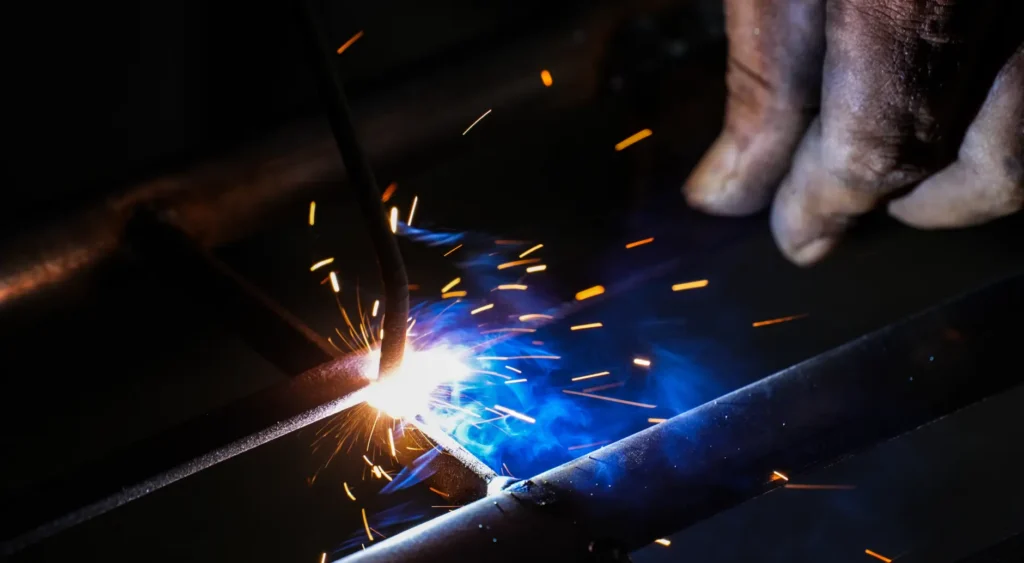
The International Agency for Research on Cancer (IARC) puts welding fume in the same cancer-risk category as asbestos. OSHA’s limit for hexavalent chromium, common in stainless and chrome-alloy welding, is 5 micrograms per cubic meter over an 8-hour shift. That’s a small number, and a busy weld bay can blow past it fast.
The fix isn’t complicated, though. This Welding Fume Extraction Guide shows how four system types cover almost every need, and the right one for your shop comes down to a handful of straightforward questions. Let’s walk through them.
Four Welding Fume Extraction System Configurations
Every welding ventilation system on the market falls into one of four categories. Which one fits your shop depends on how many stations you run, what alloys you weld, and how much floor space you have to work with.
At a Glance: Four Ways To Capture Welding Fume
| System | Best for |
|---|---|
| Source capture (arms, guns, hoods) | Almost every shop |
| Downdraft bench | Small parts, one or two stations |
| Ambient air filtration | For large areas. Scrubs the air and recirculates filtered air |
| Centralized ducted system | Multiple stations running at once |
Source Capture: Extraction Arms, Fume Guns, and Backdraft Hoods
Best for: Almost any shop, at any volume.
This is ventilation right at the arc, before fume ever reaches the welder’s face.
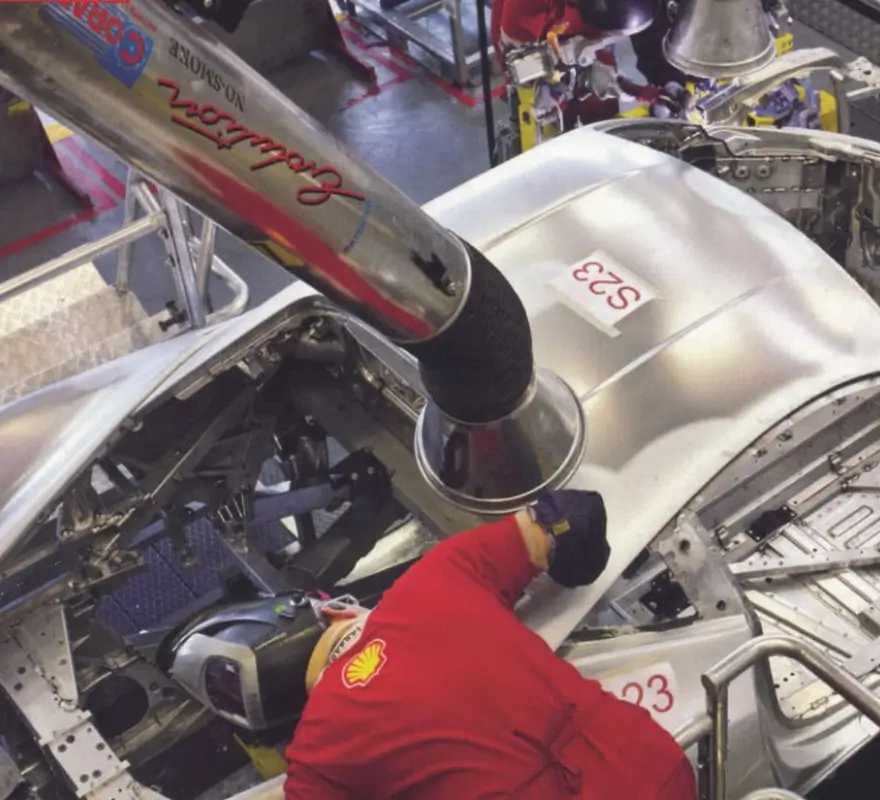
- Extraction arm: A flexible hood the welder points at the joint.
- Fume gun: Builds the same capture into the welding gun itself, so it moves with the torch.
- Backdraft hood: A fixed version for robotic or stationary setups.
OSHA and NIOSH both call source capture the most effective option, since it stops fume before it spreads into the room.
The Solution: Process Environments’ portable fume collectors pair an extraction arm with filtration built for this job.
Downdraft Benches: For Small Parts and Lower Volume
Best for: Bench work, touch-up jobs, one or two stations
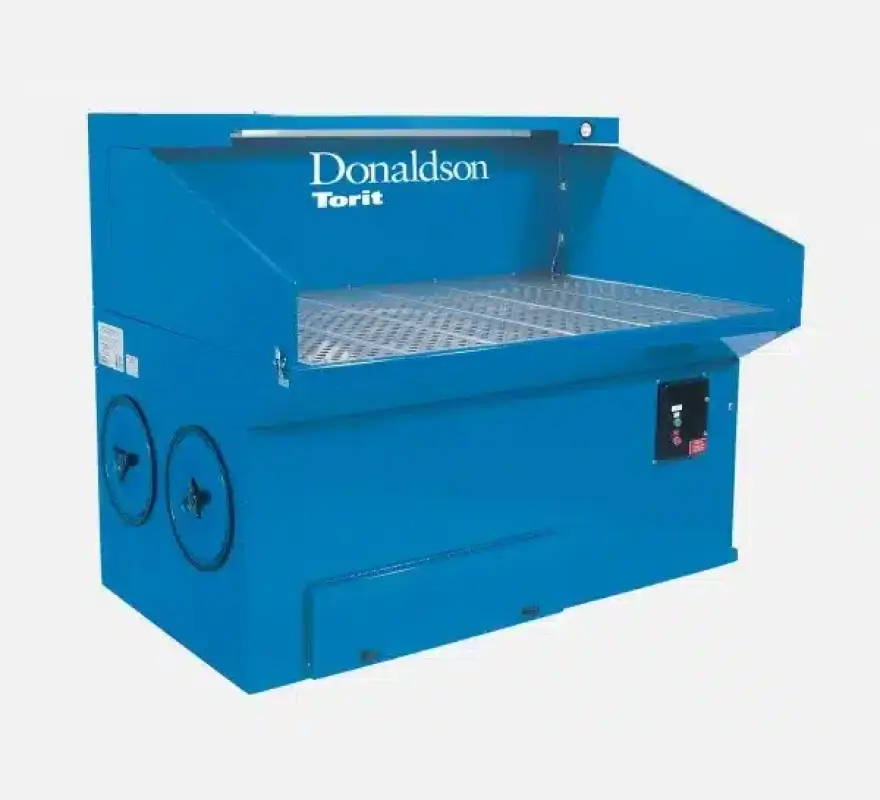
A downdraft bench pulls air down through the table and into a filter underneath. Good for smaller parts and lighter workloads, not for a busy multi-station line. It doubles as metalworking dust collection for the grinding and sanding that often happens alongside welding.
The Solution: Process Environments’ DB-800 is built for grinding, sanding, and welding small components.
Ambient Air Filtration: For large areas. Scrubs the air and recirculates filtered air
Best for: Cleaning up ambient air in the entire shop.
Ambient air filtration pulls air from the general shop, not from the arc. It handles welding fume removal for the room as a whole. Think of it as insurance for the entire space.
The Solution: Process Environments’ DFA units are built for exactly this: airborne smoke/particulate for the entire shop.
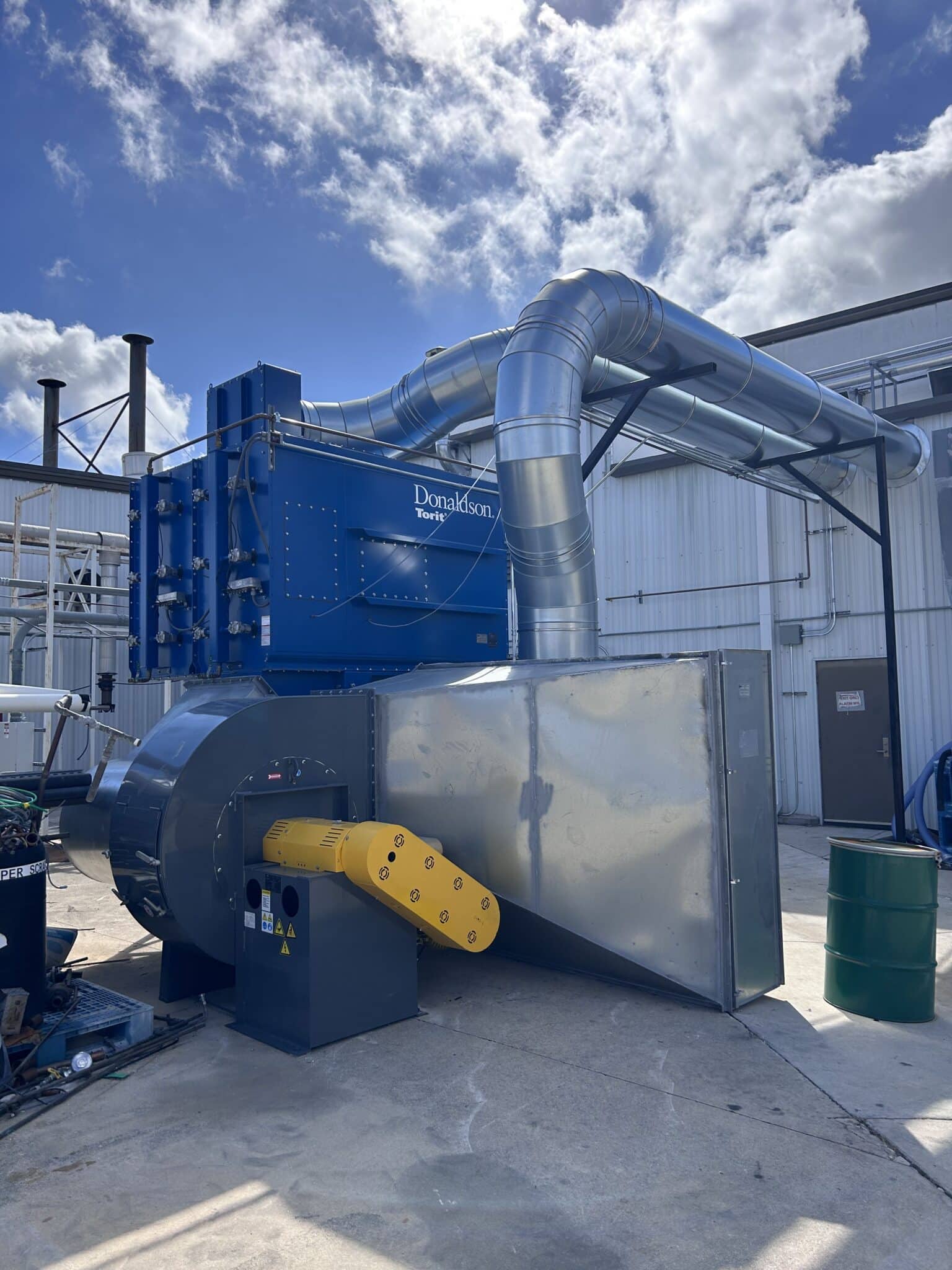
Centralized Systems: One Collector, Many Stations
Best for: Shops running several weld stations at once.
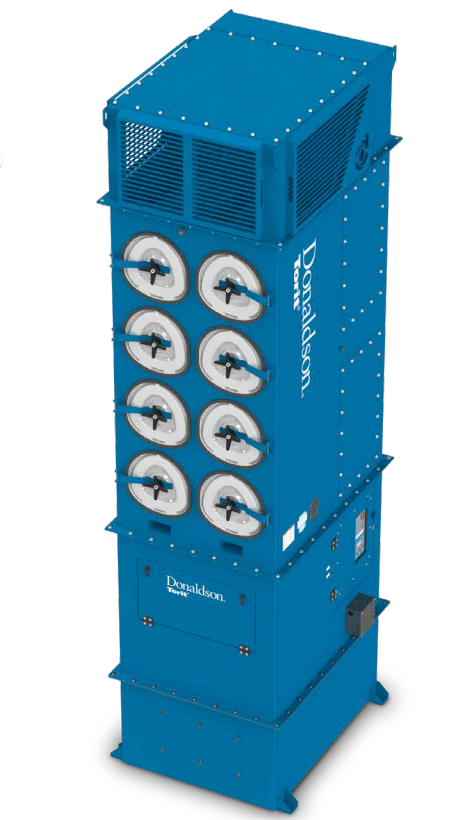
A centralized fume extraction system for welding ties every station’s hood back to one big cartridge collector or baghouse. It costs more to engineer upfront, but one collector and one filter schedule beats maintaining a dozen small ones.
The Solution: Process Environments’ custom ductwork team handles that engineering, and its industrial ventilation group builds the network around it.
Filter Media: What Stops the Fume
Weld fume extraction only works if the filter behind it can catch what it collects. Welding fume particles are tiny, well under a micron. A standard MERV 8 to 11 filter (what most HVAC systems run) lets most of that straight through. You need MERV 15 or higher, or HEPA-grade filtration, if you’re welding stainless, chrome-moly, or mild steel that kicks off hexavalent chromium or manganese.
Process Environments’ cartridge filters run MERV 15. Our bag filters include a Helix Tube option built for submicron capture.
Ask about safe-change filter procedures when you set up a filter service contract. And if your shop also grinds aluminum or magnesium alongside welding, welding fume safety includes combustible dust management, too. That’s a different hazard, and it needs its own plan.
Before You Call a Supplier, Know These Four Numbers
Here’s what your air filtration design team needs to know before we get started:
- Capture velocity. How fast air needs to move at the arc to grab the fume, usually 100 to 200 feet per minute. A hood positioned a foot too far back can undercut an otherwise well-sized system.
- Transport velocity. How fast air needs to move through the ductwork so fume doesn’t settle inside the pipe, typically 2,500 to 3,500 feet per minute for welding fume.
- Simultaneous stations. How many stations run at once. This determines centralized vs. standalone, and it drives blower size.
- Duty cycle. A station that welds all shift will load a filter faster than one that welds for twenty minutes an hour. That changes how often you’re changing filters.
Welding Fume Extraction FAQs
Get the Right Welding Fume Extractor for Your Shop
Your setup depends on how many stations you run, what you’re welding, and how hard you run them. Browse Process Environments’ welding fume extractors, or set up a free on-site evaluation to ensure you get the best solution for your setup.